Couldn't load pickup availability
Transform bedtime into playtime with this exciting twin over twin metal bunk bed featuring an integrated slide, convenient staircase, and charming house-shaped design. Combining sleep space with play area, this innovative bunk bed delivers both extra storage space to keep essentials organized and out of sight, plus natural wood and metal durability that won't crack or warp. Built for daily use with construction that withstands regular wear without falling apart, this no-box-spring-required bed works perfectly for kids rooms, shared bedrooms, sleepovers, everyday use, maintaining an organized space, and upgrading your home setup with furniture that makes every morning an adventure.
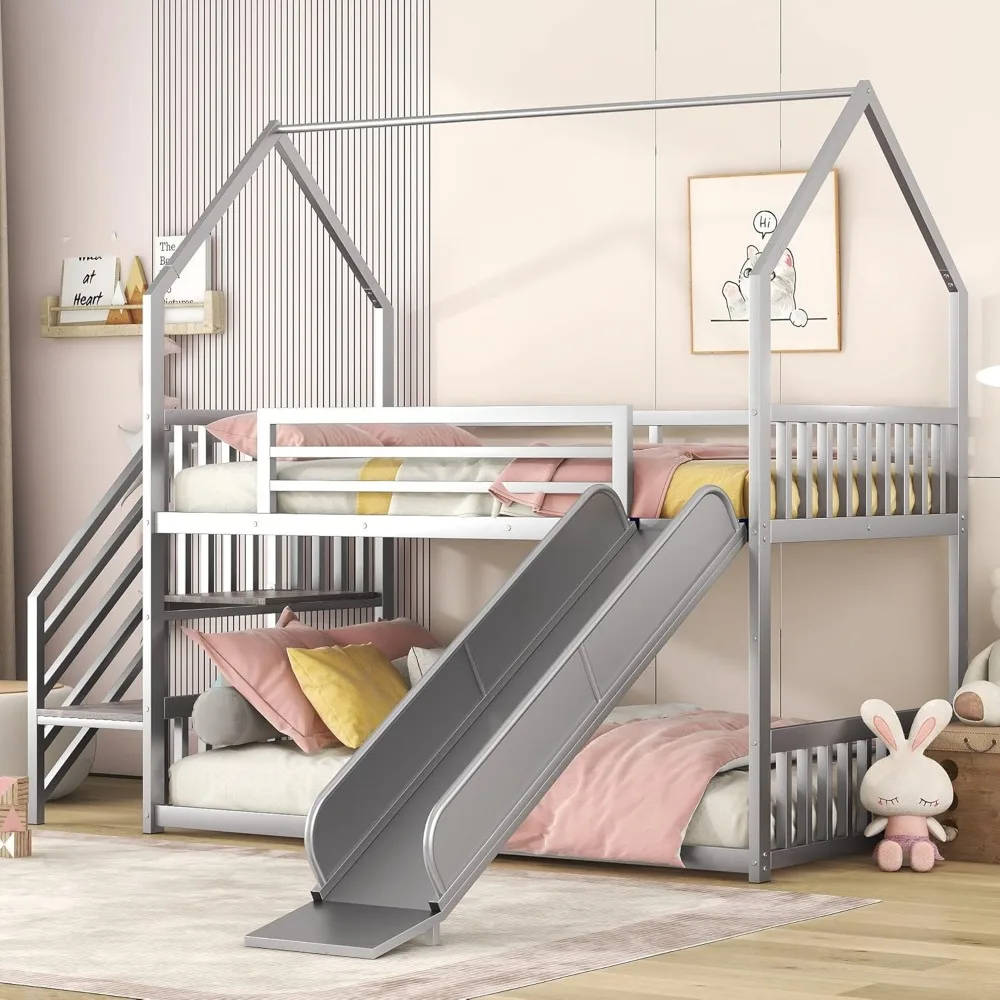
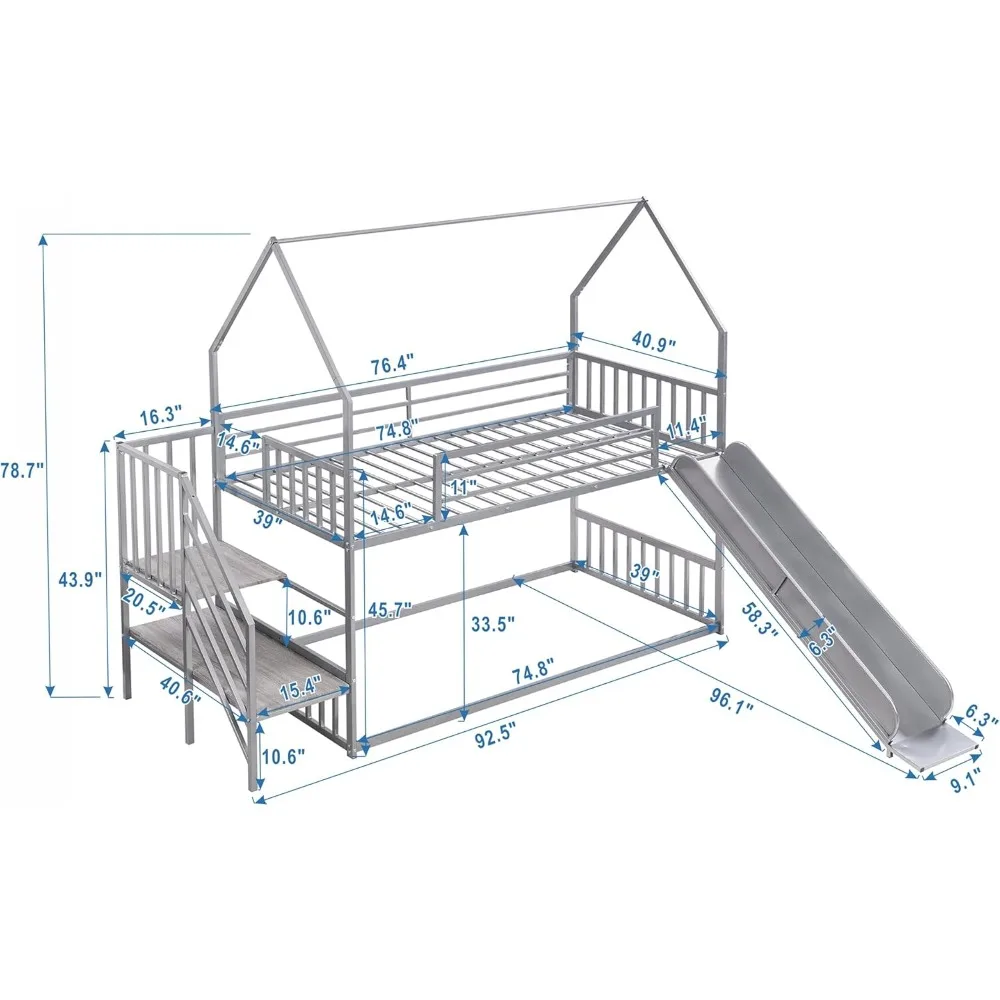
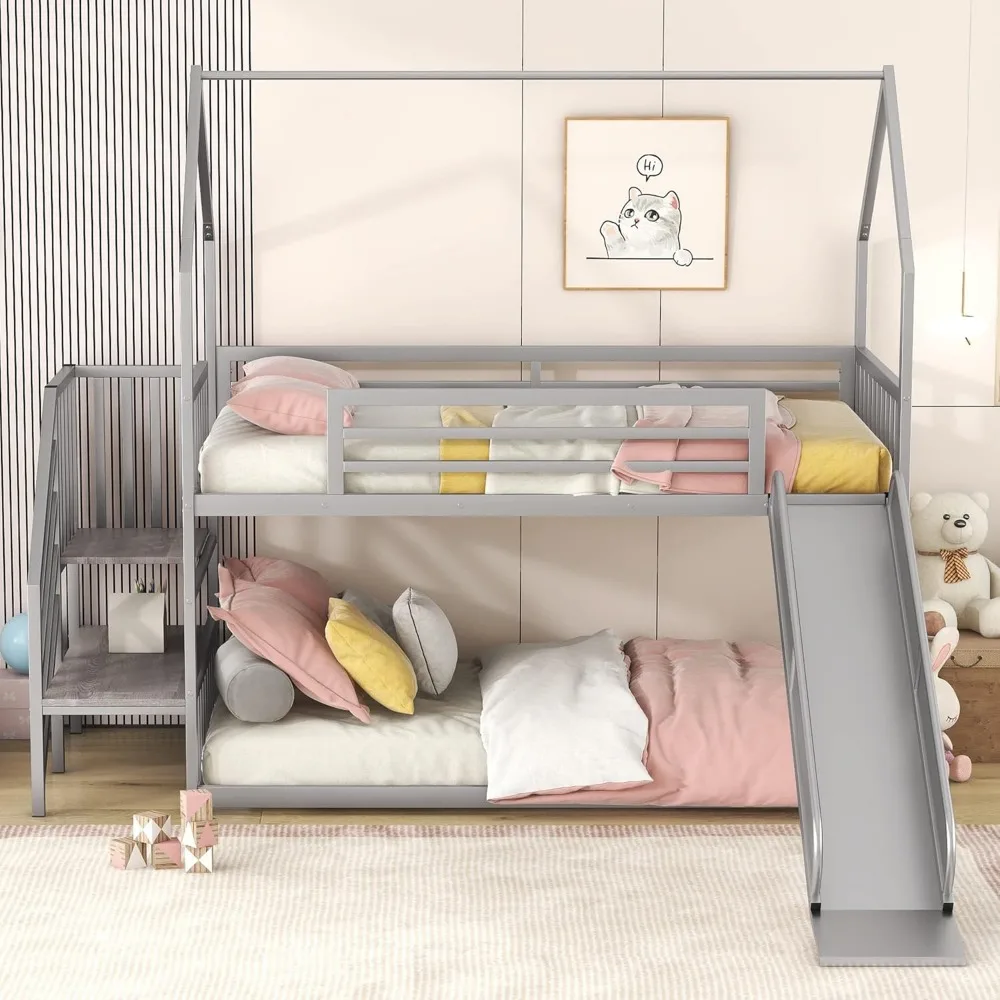
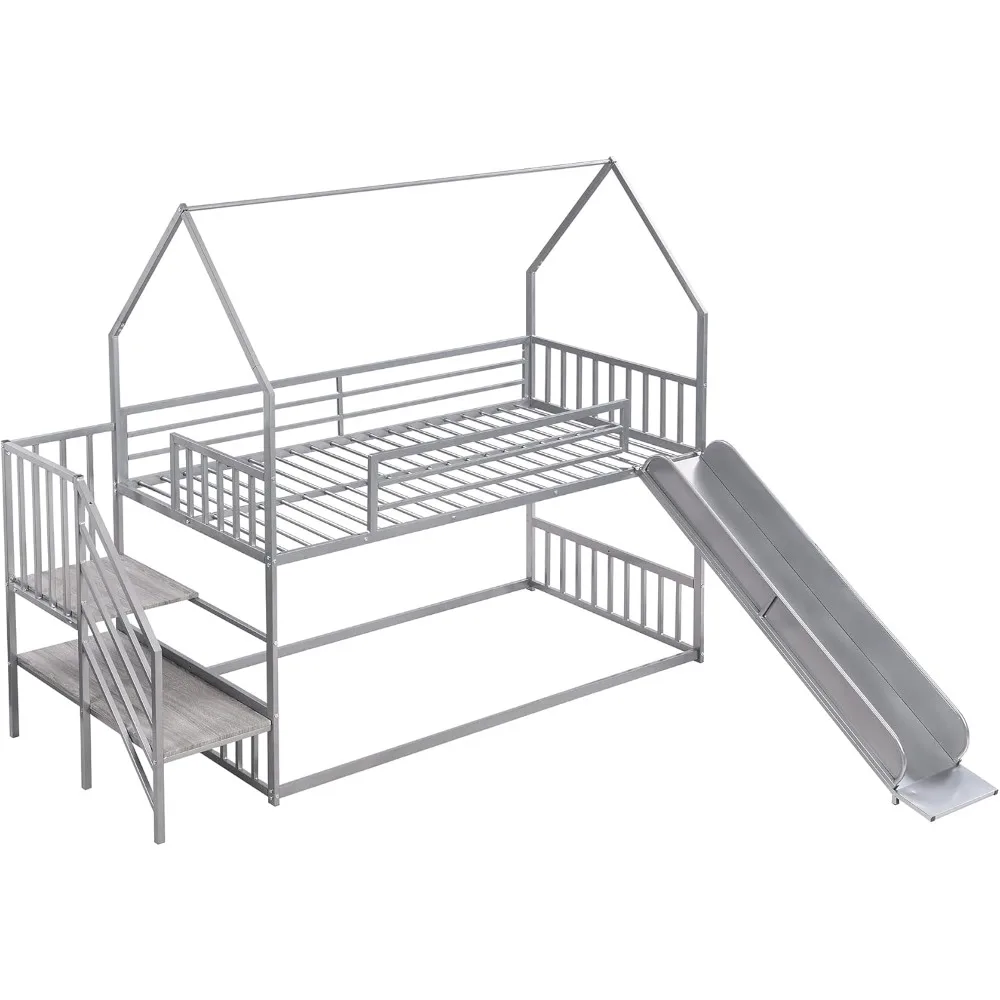
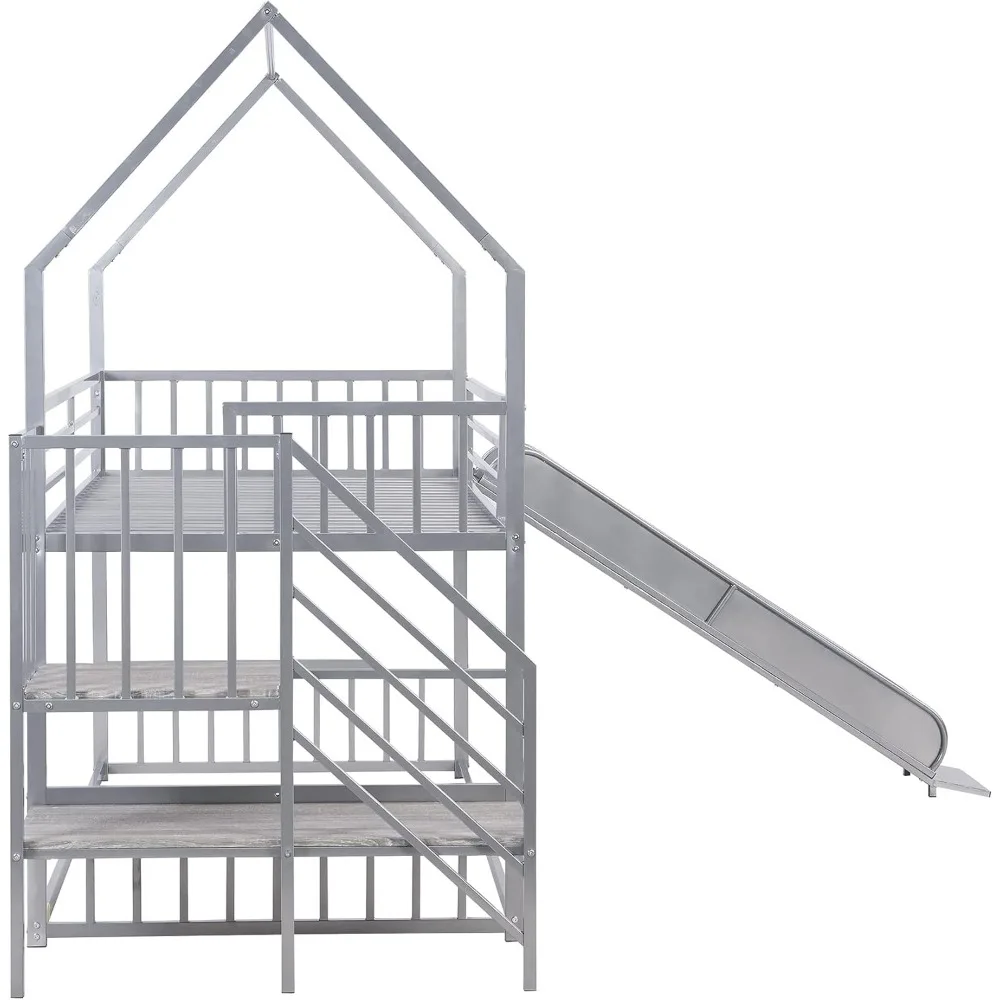

Type: Twin Over Twin Bunk Bed with Play Features for Kids
Wipe the wood and metal components with a damp cloth to remove dust and fingerprints. Avoid harsh chemicals that could damage the finish or protective coatings. Keep the bed away from direct sunlight to prevent fading of wood and metal finishes over time. Periodically check all screws, bolts, and connections to ensure the bunk bed remains stable and secure, tightening any loose hardware as needed - this is especially important with active play features like the slide. Inspect the slide regularly for any sharp edges or damage, ensuring it remains smooth and safe. Check the staircase steps to ensure they're securely attached and stable. The natural wood durability won't crack or warp with normal use, but avoid excessive moisture. Clean the slide surface to keep it smooth and safe. Establish and enforce safety rules including no roughhousing on the top bunk, proper slide use, and age-appropriate access. With proper care and supervision, this multi-functional bunk bed will provide years of safe sleep and joyful play, maintaining its structural integrity and fun features through countless adventures.
Most safety experts recommend children be at least 6 years old before using the top bunk of any bunk bed. The slide adds fun but requires supervision and safety rules. Younger children can use the bottom bunk while older siblings enjoy the top bunk and slide. Always supervise slide use, establish clear rules about one person at a time, and ensure the landing area is clear of toys and obstacles.
Yes, staircases are generally considered safer than ladders because they provide more stable footing, are easier to climb, and often include handrails. The wider steps are less intimidating for younger children and safer for nighttime bathroom trips. Many staircase designs also incorporate storage in the steps, adding functionality. Parents appreciate the added safety and kids find stairs easier to navigate than vertical ladders.
Check the specific product details, but many bunk bed slides are designed to be removable or detachable. This allows you to remove the slide if children outgrow it, if you need more floor space, or if you want to change the room configuration. The ability to remove the slide extends the bed's usefulness as children mature, transforming it from a play structure to a more traditional bunk bed.
Weight capacity varies by manufacturer, but quality twin over twin bunk beds typically support 200-250 pounds per bunk when properly assembled. Check the specific product specifications for exact weight limits. The durable wood and metal construction is built for daily use, but always adhere to stated weight limits for safety. The bottom bunk often has a higher weight capacity than the top bunk.
Most bunk beds require 8-foot ceilings minimum, with 9-10 feet being ideal for comfort and safety. Measure your ceiling height and check the bunk bed's total height before purchasing. You want adequate clearance above the top bunk so the child doesn't feel cramped and can sit up comfortably. The house-shaped design may add height, so verify dimensions carefully to ensure proper fit in your room.
While described as easy assembly, bunk beds are substantial furniture pieces that typically take 2-4 hours to assemble with two people. You'll need basic tools and should follow instructions carefully. The process is manageable for most people with DIY experience, but having a second person is essential for safety and efficiency. Professional assembly is available if you prefer, but most families successfully assemble bunk beds themselves with patience and attention to detail.
Key safety features include sturdy guardrails on the top bunk, secure staircase with handrails, smooth slide surface without sharp edges, stable construction that doesn't wobble, and proper spacing between slats. Ensure the bed meets current safety standards. Establish house rules about slide use, no jumping on beds, and appropriate behavior. Regular maintenance checks and adult supervision are essential safety measures beyond the bed's built-in features.
Check the specific product details, as some bunk beds can be separated into two individual twin beds while others cannot due to the integrated design. The house-shaped frame and slide features may make separation impractical. If future separation is important, verify this capability before purchasing. Even if separation isn't possible, the bunk configuration remains useful for years as children grow, and the slide can often be removed when kids outgrow it.